As tempS drop throughout the fall and winter, migrating birds fill Alabama’s skies. These are prime conditions for birdwatchers across the state, bringing species you can’t find any other time of year.
Fall migration usually begins in the summer and stretches into the fall, making way for other seasonal birds to start migrating for the winter. Alabama’s unpredictable climate can result in fairly mild winter temperatures, making for a great landing place for seasonal birds. Come November, our skies and forests will be peppered with an array of birds.
While not all inclusive, this short guide is a great starting place for those interested in local birding, highlighting some of Alabama’s most popular seasonal birds with resources that will help you enjoy the sights of the sky.
The autumn birds
From the Tennessee Valley’s mountains to the coastal plains of South Alabama, you can see—and hear—a host of birds, particularly breeding birds. Depending on the month, according to BWD Magazine’s Fall Birding Guide, you can see flocks of warblers, vireos and shorebirds flying South, as well as various raptors in search of prey.
These birds sometimes can be harder to spot outside of breeding season–due to being less colorful and vocal. However, catching them on the fly is always a rewarding sight.
Golden-winged Warblers
Keep an eye out for this quick flash of gold and gray darting through the forest’s foliage. This small warbler is a rare but delightful sight during migration—especially in Alabama’s forests.
Blue-headed Vireos
It’s calm and it’s curious. The Blue-headed Vireo stands out for its soft, musical song that echoes through the trees. Often, its song is one of the last tunes you’ll hear in autumn. Watch out for its green body and bluish-gray head.
Cooper’s Hawk
This is no small bird. The Cooper’s Hawk is fairly large with broad wings and a long, trailing tail. You can find these hawks in the deep forests of our state, as well as around our many trees, though they might be a bit harder to spot in the winter months. Here’s a helpful guide on how to identify them.

The winter birds
The further we step into fall, the more we start to see a new set of birds. BWD Magazine’s Winter Birding Guide encourages birders to look out for northern-breeding sparrows, juncos and warblers as they travel to call Alabama’s mild winters their “sweet home.”
White-throated Sparrow
In the winter nonbreeding months, the White-throated Sparrow finds its way down to Alabama. You can likely spot this beautiful white- or tan-striped bird closer to the ground in the woods, often flocking together. If you don’t see them, you’ll likely hear them with their whistle of “Oh-sweet-Canada,” according to this guide on identifying these sparrows.
Yellow-rumped Warbler
You guessed it, this small gray bird has flashes of yellow around its body—most notably on its rump. These Yellow-rumped Warblers are very commonly spotted flying through forests and parks. Find out the best way to spot them with this guide.
Ross’s Goose
This petite, adorable goose is striking. Ross’s Goose are fairly rare, compared to the more common Snow Goose. Its short, stubby bill often can be spotted in mixed flocks on lakes across the state. Learn how to spot them here.
Witnessing the iconic Sandhill Crane
One of the state’s grandest spectacles can be found in Decatur at Wheeler National Wildlife Refuge. On this land, hundreds—if not thousands—of birds touch down each winter, and the iconic Sandhill Crane is the star of the show.
Arriving in late November and staying usually until February, these massive, gray, elegant birds dominate the area. The refuge has viewing booths and photography blinds, making it a must-see for anyone (and especially beginners) curious about Alabama’s wild beauty.
If you’re lucky, you might even spot the endangered Whooping Crane among the Sandhill Cranes. Their tall, snow-white figures are a thrilling find and beautiful sight.
Explore Alabama’s best birding resources
Want to keep exploring? Here are a few helpful tools and resources to get you started.
- Alabama Birding Trails: With countless designated sites across the state (and a wealth of information about the wildlife at each), these regional and accessible trails are the perfect starting place to plan your next outing.
- Alabama’s Code of Birding Ethics: As wildlife viewers, the protection of plants, animals and ecosystems is paramount. This is a great resource to understand how to be a good steward of the environment and bird ethically and honorably.
- Alabama Ornithological Society: The Alabama Ornithological Society (AOS) is a conservation and education organization that promotes the welfare of birds and other natural resources in our state. AOS members meet in Dauphin Island each winter, spring and fall.
- Alabama Forever Wild Land Trust: The Alabama Forever Wild Land Trust has hundreds of thousands of acres of land set aside for public use, public conservation and recreation. Much of this land includes popular birding spots. Their website is a great resource for finding opportunities to see wildlife.
- North Alabama Birdwatchers Society (NABS): For the tech innovators in North Alabama, the NABS is a great way to get involved with a community of birdwatchers at any experience level. Visit their website to find out more information on how to get involved.
Start birding around you today
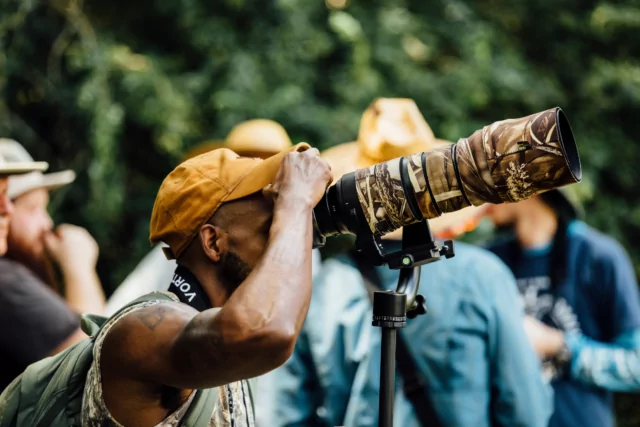
Birding isn’t just another hobby—it can be a great way to slow down, explore undiscovered corners of the state and learn to notice all that’s around you. Wherever you are, grab a pair of binoculars, head outside and look to the sky. You can even explore apps like Merlin Bird ID, eBird and iNaturalist to help you get started.
Whether you’re watching a flock of sparrows or marveling at the sights of Wheeler National Wildlife Refuge’s crane spectacle, Alabama’s skies are full of stories worth chasing. What will you spot this season?